

Uncategorized
Why Some Jerseys Feel Heavy and Others Don’t
Feb
If you have ever worn different sports jerseys, you might have noticed that some feel heavy while others feel light and comfortable. This difference in weight can affect how you feel during a game or workout. But why does this happen? Let’s explore the main reasons why some jerseys feel heavy and others don’t.
1. The Type of Material
The fabric used to make jerseys is one of the main reasons why they feel different in weight. Jerseys are usually made from materials like cotton, polyester, or blends of different fibres.
- Cotton is cosy and soft, but it absorbs moisture and perspiration easily. Cotton can feel heavier and stick to your skin when it gets wet.
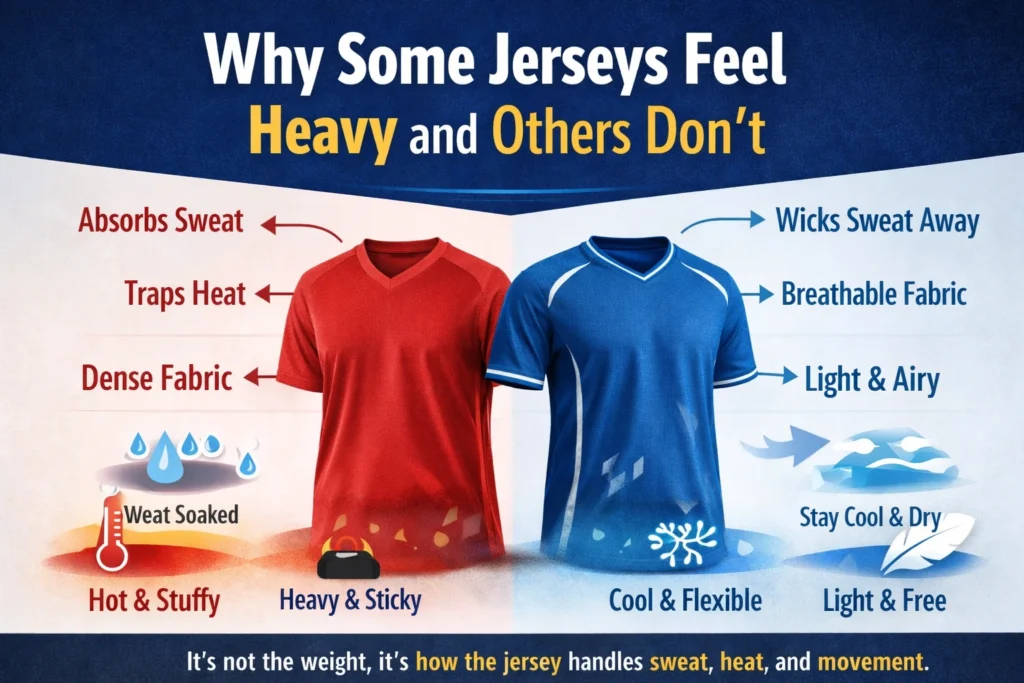
- Polyester is a popular material for sports jerseys because it is lightweight and dries quickly. Even during vigorous exercise, it typically feels lighter because it aids in wicking moisture away from the body.
- Jerseys made from thick or dense fabrics tend to be heavier, while thinner, more breathable fabrics feel lighter.
2. Moisture Absorption and Wicking
The jersey’s ability to withstand moisture, such as perspiration or rain, is another important consideration.
- Jerseys made from cotton or other absorbent materials soak up sweat and water, making the fabric heavier and less comfortable.
- On the other hand, many modern jerseys use moisture-wicking technology. These fabrics pull sweat away from your skin and allow it to evaporate quickly. Even when you perspire a lot, this keeps the jersey light and dry.A jersey with good moisture-wicking qualities will feel much lighter and fresher than one that absorbs perspiration when you are exercising or participating in sports.
3. Add-Ons and Design Details
Sometimes, the design of the jersey itself can add weight.
- Jerseys with patches, numbers, or logos that are embroidered or made of thick materials may feel heavier.
- For durability, some jerseys have additional layers or reinforced stitching, which can add weight.
- On the other hand, simpler designs with fewer added elements tend to be lighter.
If you prefer a lightweight jersey, look for one with minimal decoration or printed graphics rather than heavy patches.
4. Fit and Layering
The way a jersey fits can also affect how heavy it feels.
- Because a tight jersey is closer to your skin and may retain moisture and heat, it may feel heavier.
- A loose jersey might feel lighter but could also catch wind or get in your way depending on the activity.
- Wearing layers under your jersey, like a compression shirt or an undershirt, adds to the overall weight you feel.
Choosing the right fit for your activity and climate can help you feel more comfortable and less weighed down.
5. Environmental Factors
The environment and weather have a big impact on how heavy a jersey feels.
- Humid or rainy conditions can make jerseys heavier because the fabric absorbs moisture from the air or rain.
- Even a jersey designed to be lightweight can feel heavy if it becomes soaked in water.
- In dry and cool conditions, jerseys usually feel lighter and more comfortable.
Selecting a jersey with good material is ideal if you anticipate being in damp or muggy conditions.
6. Quality and Fabric Technology
Advances in fabric technology have made a big difference in how jerseys feel.
- High-quality jerseys use special fibers and weaving techniques that make them both strong and light.
- Some fabrics are designed to be breathable, stretchable, and moisture-resistant all at once.
- These jerseys can feel almost weightless on the body, even during long periods of wear.
Investing in a good-quality jersey often means you get a product that feels lighter and performs better.
Conclusion
In summary, the weight you feel when wearing a jersey depends on several factors. The material type, moisture absorption, design details, fit, environmental conditions, and fabric technology all play important roles. Jerseys made from moisture-wicking polyester with simple designs and a good fit tend to feel lighter and more comfortable. Meanwhile, cotton jerseys or those with heavy patches and layers may feel heavier, especially when wet.
When choosing a jersey, consider what activity you will be doing and the conditions you expect. Picking the right fabric and fit can make a big difference in how comfortable and light your jersey feels, helping you perform your best.
Gear Your Team for Success – Discover Premium Custom Jerseys with Miles Teamwear Today!
