

Uncategorized
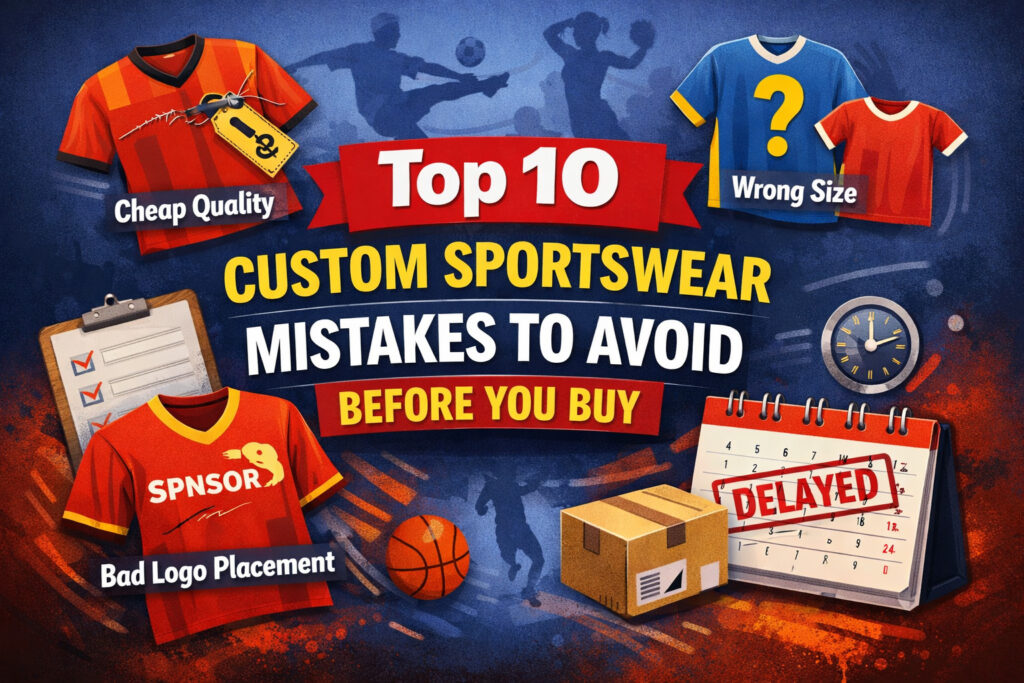
Top 10 Custom Sportswear Mistakes to Avoid Before You Buy
Jan
Custom sportswear plays a bigger role than many teams realize. It affects comfort, confidence, performance, team identity, and even how a club is perceived by opponents and supporters. While ordering custom kits or training apparel may seem straightforward, many teams end up disappointed because of avoidable mistakes made during the process.
Whether you are a coach, team manager, academy owner, or club administrator, understanding these common mistakes can help you save money, avoid delays, and ensure your players get sportswear that truly supports their performance.
This guide breaks down the most frequent errors teams make—and how to avoid them.
1. Prioritizing Low Price Over Overall Quality
One of the most common mistakes teams make is choosing sportswear based solely on price. Budget matters, but the cheapest option often leads to poor outcomes.
Low-quality sportswear can:
- Tear or fade after a few washes
- Trap heat and sweat
- Restrict movement
- Lose shape during the season
For competitive teams, uncomfortable or poorly made apparel can negatively impact performance and morale. In the long run, replacing damaged kits costs more than investing in durable, well-made sportswear from the start.
Key takeaway: Look at sportswear as a seasonal or multi-season investment, not a one-time expense.
2. Ignoring Sport-Specific Fabric Requirements
Not all fabrics are suitable for every sport, yet many teams order the same material across all apparel types.
For example:
- Football and basketball require lightweight, breathable fabrics
- Rugby and contact sports need durability and stretch
- Training wear should balance flexibility and sweat control
Using the wrong fabric can cause overheating, discomfort, and reduced mobility. Fabric choice should be based on how players move, how much they sweat, and where they play (indoor or outdoor).
Best practice: Always consider the sport’s physical demands and climate conditions before selecting fabric.
3. Incorrect Sizing and Poor Fit Planning
Sizing issues are one of the biggest sources of complaints in custom sportswear orders. Many teams assume standard sizing will fit everyone, but body shapes vary widely within a squad.
Common problems include:
- Jerseys that are too tight for some players
- Shorts that are too long or too loose
- Youth players receiving adult-sized kits
Poor fit affects comfort, confidence, and freedom of movement. It can also lead to players modifying kits themselves, which reduces uniformity.
How to avoid this mistake:
- Use detailed size charts
- Collect individual player measurements
- Plan for substitutions or late joiners
4. Overlooking Logo Placement and Visibility
Logos and sponsor branding are important, but placement matters more than many teams realize. Incorrect positioning can make logos hard to see or distort them during play.
Issues often arise when:
- Logos are placed too low or too close to seams
- Designs don’t account for body movement
- Shorts and sleeves are ignored as branding areas
Different sports require different logo placements to ensure visibility during matches, photography, and media coverage.
Tip: Always review logo placement guide with movement and visibility in mind—not just aesthetics.
5. Rushing the Design Approval Process
In a rush to meet deadlines, many teams approve designs too quickly. This is risky because even small errors become permanent once production begins.
Common issues include:
- Misspelled team names
- Incorrect sponsor logos
- Wrong colors or gradients
- Misaligned graphics
Once printed, these mistakes are costly—or impossible—to fix.
Best practice: Take time to review final mockups carefully and involve more than one person in approval.
6. Failing to Plan for Future Team Needs
Many teams order only what they need for the current season without considering future requirements. This creates problems when:
- New players join mid-season
- Kits are damaged or lost
- Sizes are no longer available
Without proper planning, replacement kits may not match the original batch, affecting team consistency.
Smart approach: Keep designs on file and order extra units or plan for reorders in advance.
7. Underestimating Production and Delivery Timelines
Custom sportswear is not instant. Production, printing, quality checks, and shipping all take time.
Mistakes occur when teams:
- Order too close to tournament dates
- Assume custom orders ship like ready-made apparel
- Forget to factor in shipping delays
Late deliveries can force teams to play in mismatched kits or delay season starts.
Recommendation: Always order well ahead of important matches or league deadlines.
8. Lack of Clear Communication with the Supplier
Poor communication leads to misunderstandings and unmet expectations. Some teams hesitate to ask questions, assuming everything is standard.
Important details often overlooked include:
- Printing methods and durability
- Washing and care instructions
- Color accuracy
- Reprint or correction policies
Clear communication ensures both parties understand expectations before production begins.
9. Ignoring Comfort and Player Feedback
Sometimes decisions are made solely by management without involving players. This can lead to kits that look good but feel uncomfortable during play.
Players are the ones wearing the sportswear for hours each week. Ignoring their input can affect confidence and performance.
Better approach: Gather player feedback on fit, fabric, and comfort whenever possible.
10. Treating Custom Sportswear as “Just Uniforms”
Custom sportswear is more than clothing. It represents:
- Team identity
- Club professionalism
- Unity and pride
When treated as an afterthought, it often fails to deliver its full value.
Teams that plan carefully, communicate clearly, and focus on performance benefits gain more than just uniforms—they build a stronger team presence.
Final Thought
Ordering custom sportswear doesn’t have to be complicated, but it does require planning and attention to detail. By avoiding these common mistakes, teams, coaches, and clubs can ensure their sportswear supports performance, durability, and identity throughout the season.
A thoughtful approach leads to better results on and off the field.
Teams should order 4–8 weeks in advance to allow time for design approval, production, and delivery before the season or tournament starts.
The biggest mistake is choosing the cheapest option instead of focusing on fit, fabric quality, and durability, which affects comfort and performance.
Yes. Ordering a few extra pieces helps cover new players, size changes, or replacements during the season and keeps the team kit consistent.
