

Uncategorized
The Science Behind Making Modern Football Jerseys
Oct
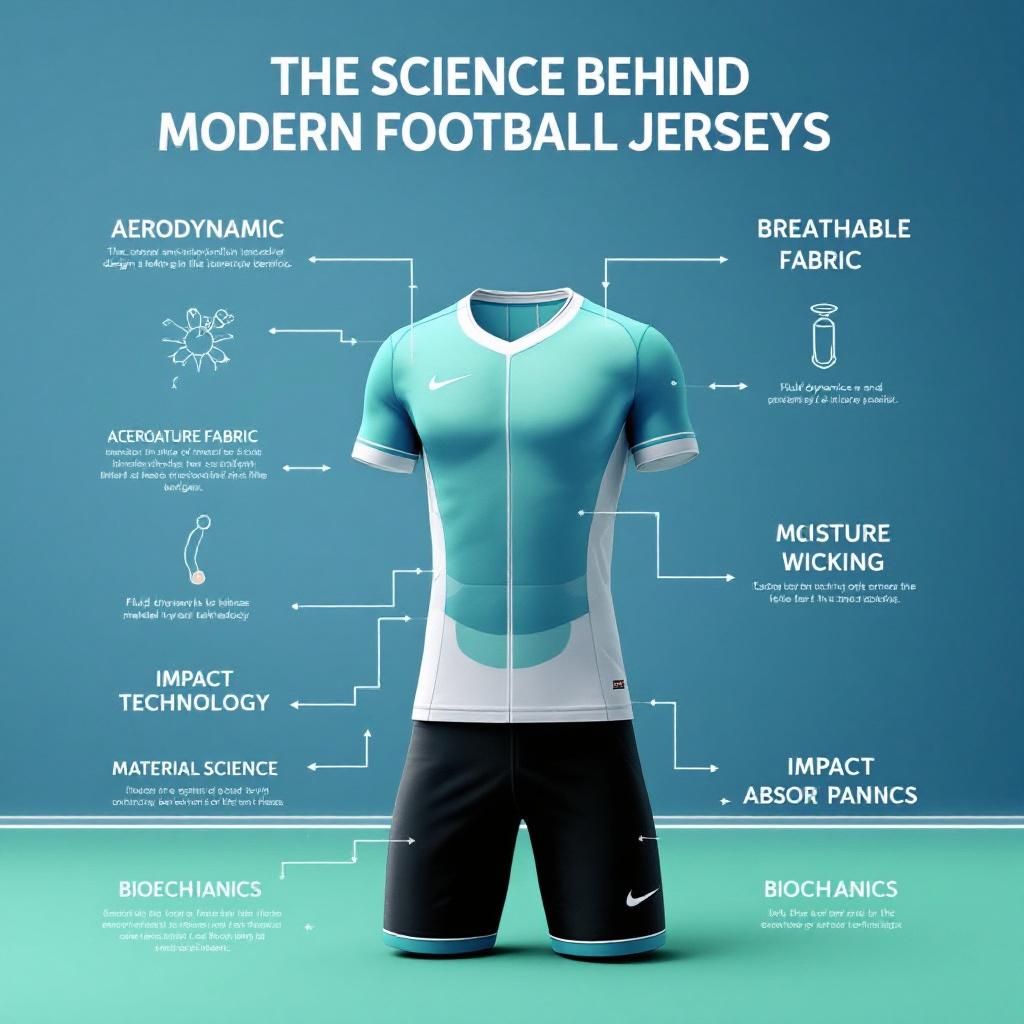
Modern football jerseys are no longer simple uniforms — they are advanced pieces of sports engineering. Today’s kits are lightweight, aerodynamic, and designed around performance. Every seam, panel, and fiber is crafted using scientific research and high-precision technology.
This guide explores how modern football kits are made and why technology plays such a major role in their performance.
1. Fabric Technology: Moisture Control & Temperature Management
Football jerseys are engineered to manage sweat, regulate body temperature, and stay lightweight throughout intense play.
The Science Behind Moisture-Wicking (Capillary Action)
Modern jersey fibers move sweat away from the skin using capillary action — a process that pulls moisture to the outer surface where it evaporates quickly.
This helps players:
- Stay dry
- Avoid heavy, soaked fabric
- Maintain body temperature
- Perform comfortably for longer periods
Ventilation Zones & Airflow Engineering
Manufacturers add mesh ventilation panels to high-heat areas such as:
- Underarms
- Upper back
- Side panels
These improve airflow and prevent overheating during intense matches.
2. Design Technology: Precision Fit Through Athlete Movement Analysis
Before a jersey is even produced, designers use technology to study how athletes move.
3D Body Mapping
3D scanning technology tracks body movement — sprinting, twisting, stretching, and directional changes.
From this data, designers place:
- Stretch zones
- Mesh panels
- High-mobility seams
This results in a jersey that moves naturally with the athlete.
Aerodynamic Engineering
Modern football jerseys are shaped to reduce drag.
Streamlined panel placement improves:
- Speed
- Agility
- Overall fluid movement
Even small aerodynamic improvements matter at competitive levels.
3. Manufacturing Process: From Digital Design to Finished Jersey
Modern football jerseys go through a high-tech manufacturing workflow.
Step 1: CAD Digital Prototyping
Manufacturers use Computer-Aided Design (CAD) to create digital jersey patterns.
This ensures:
- Accurate panel shapes
- Reduced material waste
- Perfect alignment of graphics and seams
Step 2: Precision Cutting With Laser Machines
Laser cutters slice fabric with extreme accuracy, keeping panels consistent and improving overall fit and durability.
Step 3: Sublimation or Digital Printing
Designs are added using sublimation printing, which infuses the ink directly into the fibers.
Benefits:
- Colors never fade
- Graphics never crack
- Perfect for long-term use
Step 4: Professional Stitching & Panel Engineering
Industrial sewing machines reinforce key areas such as:
- Shoulders
- Collar joints
- Side seams
Every panel is positioned to match natural movement and reduce friction.
Step 5: Quality Control & Performance Testing
Jerseys undergo tests for:
- Stretch capacity
- Moisture management
- Durability
- Colorfastness
Only then are they approved for player use.
4. Performance Engineering: Why Today’s Jerseys Feel Lighter & Faster
Football kits are optimized to support athletic performance.
Advanced Temperature Regulation
Ventilation + moisture-wicking technology keeps players cool without trapping heat.
Weight Optimization
Manufacturers calculate jersey weight down to the gram.
Lighter jerseys mean:
- Faster movement
- Better agility
- Less fatigue
Reduced Friction & Skin Irritation
Low-profile or seamless stitching prevents chafing during long matches.
5. Sustainability: Eco-Friendly Developments in Jersey Production
Sportswear brands now focus heavily on reducing environmental impact.
Recycled Polyester Technology
Modern jerseys often use polyester made from:
- Recycled plastic bottles
- Ocean waste
These sustainable fibers match the performance of new polyester.
Waterless Dyeing Techniques
Waterless dyeing reduces:
- Water consumption
- Chemical runoff
- Energy waste
Low-Carbon Manufacturing
Factories use renewable energy and smart cutting systems to reduce carbon emissions.
6. The Future: Smart Jerseys & Integrated Technolog
Football jerseys are evolving beyond fabrics and stitching.
Smart Fabrics
Future kits may include embedded sensors that track:
- Heart rate
- Temperature
- Hydration levels
- Real-time performance data
This will transform jerseys into advanced wearable devices.
Conclusion
Modern football jerseys combine science, design innovation, and precision engineering. From moisture-wicking technology and 3D body mapping to laser cutting and sustainable production, every detail is created to boost player performance.
As technology continues to evolve, football kits will become even more advanced — turning jerseys into high-performance gear built for the modern game.
